
How to Protect Your TV From Baby and Kids — Complete Parent’s Guide (2026)
You bought a television for your family. Then your baby learned to walk.
Now your 55 inch Samsung QLED has fingerprints at toddler height. Your two-year-old points at every cartoon character as if the screen is a touchscreen. Your five-year-old has already dropped a toy against the bottom corner.
If you are reading this, you already know the problem. This guide gives you the complete solution — practical, affordable, and specifically for Indian homes with young children.
Why TVs and Young Children Are a Dangerous Combination
The average Indian family TV is mounted at 3–4 feet from the floor or placed on a low TV unit — exactly at eye level for a toddler standing up and within arm’s reach of a crawling infant who pulls up to stand.
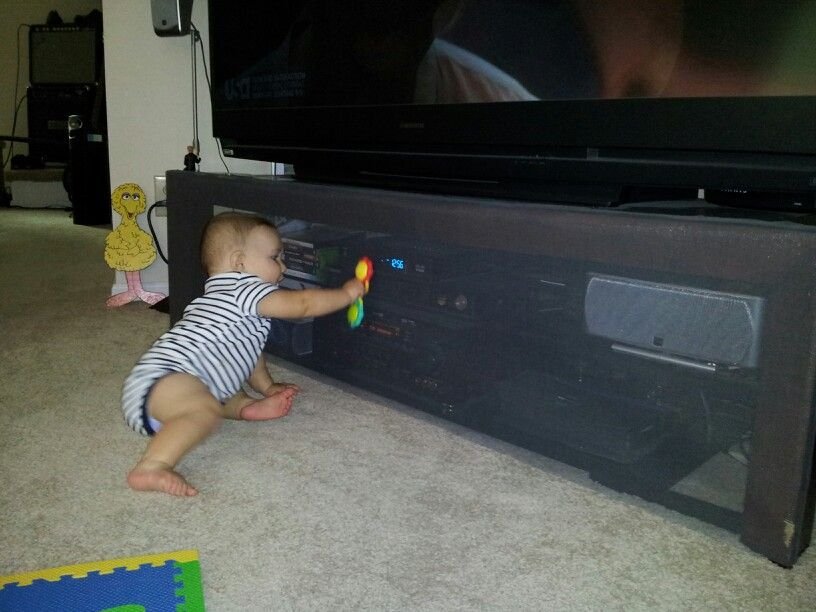
Children interact with TV screens in ways that cause three types of damage:
1. Fingerprint abrasion — the most common A toddler’s fingerprint on a TV screen is not just a smudge. When a child touches the screen and then wipes their own hand across it — which they do naturally — they drag whatever is on their fingers across the panel coating. Sand from a playground. Food residue. Dust. Any of these dragged across an anti-reflective TV coating leaves micro-scratches that accumulate over months into visible panel degradation.
2. Impact damage — the most expensive Toys thrown at or against a TV screen, remote controls dropped on the screen from a sofa, a child falling and catching the screen — all create impact risk. The corner of a toy car against a 65 inch LG OLED panel is a potential ₹45,000 repair. A toddler falling with their face toward a wall-mounted TV is a serious injury risk and a panel replacement scenario simultaneously.
3. Blue light exposure — the least visible but most ongoing Children’s eyes transmit 70% more blue light to the retina than adult eyes. A child watching a 43 inch TV from 3 feet away for 2 hours daily is accumulating significant blue light exposure that affects sleep quality, eye development, and concentration. This damage is invisible day to day but compounds over years.
The Complete Protection Setup for Families With Young Children
Layer 1 — TV Screen Protector (most important)
A TV screen protector is the single most important protection you can add to a family TV. It sits directly on the panel surface via static cling — no adhesive, no gap — and absorbs everything that contacts the screen before it reaches the panel coating beneath.
What it protects against:
- Fingerprint abrasion — every touch lands on the protector, not the panel
- Cleaning abrasion — you wipe the protector, the panel stays factory-fresh
- Minor impact — toy corners, remote edges, small objects
- Dust drag — cleaning the protector prevents dust from reaching the panel
Which variant for a family with children:
For families with young children the blue light filter variant is the strongest recommendation. It combines physical panel protection with 50% reduction in blue light output — addressing both the screen damage risk and the eye health risk in one product.
At ₹2,999 for a 55 inch blue light filter protector — the cost is less than one restaurant meal for the family. The cost of replacing a scratched or cracked 55 inch OLED panel is ₹28,000+.
Screen Guardian Blue Light Filter TV Screen Protector →
Available sizes:
- 32 Inch — bedroom and children’s room TVs
- 43 Inch — most common children’s room size
- 55 Inch — living room family TV
- 65 Inch — premium family TV
Layer 2 — TV Placement and Mounting
Where and how your TV is positioned determines how much risk your child can reach.
Wall mounting — strongly recommended for families with young children A TV mounted on a wall at adult viewing height — typically 1.2 to 1.5 metres from floor to centre of screen — is significantly harder for a toddler to reach than a TV on a low unit at 0.6 metres. Wall mounting also eliminates the risk of the TV being pulled forward by a child grabbing the unit it sits on.
Use a tilting wall mount so you can angle the screen slightly downward for comfortable adult viewing while maintaining the height advantage.
If floor-standing on a unit is not avoidable:
- Anchor the TV unit to the wall with furniture anchor straps (₹200–₹400, available on Amazon India)
- Use anti-tip furniture straps on the TV itself
- Keep the TV unit flush against the wall with no gap a child can pull from
Layer 3 — TV Safety Guard / Barrier
A TV safety guard is a physical barrier — typically a mesh or acrylic panel on a freestanding frame — that stands between the child and the TV entirely. Unlike a screen protector which sits on the panel, a safety guard creates a physical wall that a young child cannot get past.
When a TV safety guard makes sense:
- Toddlers under 2 years who cannot understand “don’t touch”
- Homes where the TV cannot be wall-mounted
- Children with special needs who interact physically with the screen
- Playroom TVs that face direct child traffic
Search “tv safety guard for babies” or “childproof tv guard flat screen” on Amazon India — several options are available from ₹800 to ₹2,500 depending on size.
The limitation of TV safety guards: They are bulky, they change the visual appearance of the TV, and they need to be removed every time an adult watches. Many families use them for 12–18 months during the most active toddler phase and then switch to a screen protector alone as the child develops better impulse control.
The ideal setup: TV safety guard for toddlers under 2 + screen protector on the panel permanently. The safety guard protects from impact and physical contact. The screen protector protects the panel surface regardless of what gets past the safety guard.
Layer 4 — Viewing Distance and Blue Light Management
Recommended minimum viewing distances for children:
| TV size | Minimum viewing distance for children |
|---|---|
| 32 inch | 1.2 metres |
| 43 inch | 1.5 metres |
| 55 inch | 2.0 metres |
| 65 inch | 2.5 metres |
Most Indian children sit closer than these distances — particularly in small apartments where the living room and TV are close together. A floor marking (tape on the floor at the recommended distance) works surprisingly well for children from age 3 upwards.
Blue light management beyond the screen protector:
- Enable Night Mode or Eye Comfort mode on your TV for children’s viewing sessions — this reduces blue light output at the software level before it even reaches the screen protector filter
- Schedule children’s TV time before 7pm rather than immediately before bedtime — blue light’s melatonin-suppressing effect is strongest in the 2 hours before sleep
- The combination of Night Mode + blue light filter screen protector reduces blue light exposure by up to 70% — meaningful for children who watch 2+ hours daily
Layer 5 — Regular Cleaning Routine
With children in the home, TV screens need more frequent cleaning — and how you clean matters as much as how often.
The correct cleaning routine for a family TV:
Always clean with the TV switched off. A powered TV generates static that attracts dust particles to the surface during wiping.
Use a clean, dry microfibre cloth. Never use kitchen towels, T-shirts, wet wipes, or any cleaning spray directly on the screen. These either abrade the surface or introduce liquid that can seep into the panel edges.
With a screen protector installed — clean as often as needed. Fingerprints, food residue, and smudges all come off the protector surface easily. The panel beneath stays completely untouched regardless of how often you clean.
Without a screen protector — clean as infrequently as possible and only with a dry microfibre cloth in one direction with minimal pressure. Every cleaning pass without a protector is a scratch risk.
The Most Common TV Damage Situations in Indian Family Homes
Scenario 1 — The wipe with a wet cloth Your child spills something near the TV. You or the child wipes the screen with whatever is nearest — a wet kitchen cloth. Result: liquid seeps into the panel edge, potential long-term moisture damage, and cleaning abrasion from the cloth fibres. Solution: screen protector + dedicated dry microfibre cloth kept near the TV.
Scenario 2 — The toy corner impact A toy thrown at or placed against the TV screen. Toy cars, building blocks, and remote controls all have corners that concentrate force into a small point on the panel. Result: potential crack or deep scratch. Solution: TV safety guard for children under 2, screen protector for children 2 and above.
Scenario 3 — The cleaning cloth chase You clean the TV screen regularly with the same cloth you use for other surfaces. That cloth has picked up grit, dust, and debris from other surfaces. Every wipe on the TV drags these particles across the panel. Result: cumulative micro-scratch damage that becomes visible haze over 12–18 months. Solution: dedicated microfibre cloth kept only for TV cleaning, and a screen protector on the panel.
Scenario 4 — The close-viewing habit Your child watches from 1 metre or less every day. Over months and years of this habit, blue light exposure accumulates. Result: increased risk of digital eye strain, disrupted sleep patterns, and potential long-term vision effects. Solution: blue light filter screen protector + viewing distance rules + Night Mode enabled.
What to Buy — Quick Recommendation
For families with a baby or toddler (under 2 years): TV safety guard (physical barrier) + Screen Guardian blue light filter screen protector on the panel permanently.
For families with children aged 2–8 years: Screen Guardian blue light filter screen protector — covers panel protection, fingerprint resistance, and blue light reduction in one product. No physical barrier needed if the child understands basic boundaries.
For children’s bedroom TV (32 or 43 inch): Screen Guardian crystal clear or blue light filter protector. The 43 inch is the most common children’s room TV size in India — at ₹1,899 the crystal clear protector is the most affordable protection available for this size.
Frequently Asked Questions
Can a screen protector stop my child from cracking the TV screen?
A screen protector provides protection against minor impacts — toy corners, fingerprails, small objects. It will not absorb a direct hard impact from a heavy object. For protection against significant impacts, a TV safety guard (physical barrier) combined with wall mounting at a height the child cannot reach is the correct setup.
Is blue light from TV harmful for babies?
Yes — particularly for infants under 2 years. The American Academy of Paediatrics recommends no screen time for children under 18 months except video calling, and limited screen time for children 2–5 years. When children do watch TV, a blue light filter screen protector and Night Mode enabled on the TV reduce exposure meaningfully.
What is a TV safety guard and where can I buy one in India?
A TV safety guard is a physical protective barrier — usually mesh or acrylic on a frame — that stands between the child and the TV. Available on Amazon India, Flipkart, and FirstCry for ₹800–₹2,500 depending on TV size. Search “tv safety guard india” or “childproof tv screen guard”.
Does a screen protector affect picture quality for children’s content? No. Screen Guardian’s 99.5% transparency crystal clear protector is invisible at normal viewing distances. Colours, brightness, and sharpness are unchanged. The blue light filter variant introduces a very slight warm tone — similar to Night Mode — which is not distracting for children and reduces their blue light exposure during viewing.
My child already scratched the TV — is it too late? It is too late to repair the scratch — TV panel scratches are permanent. But it is not too late to prevent further damage. A screen protector applied over an existing scratch covers it optically and prevents any new scratches from forming. The panel beneath the protector stays in its current condition — no further degradation.
The Bottom Line
Protecting your TV from children comes down to two decisions — what sits between your child and the TV panel, and what sits on the TV panel itself.
For children under 2: TV safety guard + screen protector. For children 2 and above: screen protector alone is sufficient if basic viewing rules are in place.
Screen Guardian’s blue light filter TV screen protectors are the recommended choice for family TVs — panel protection, fingerprint resistance, and 50% blue light reduction in one product. Sizes from 32 to 75 inch. Ships pan India within 24 hours.
Shop Screen Guardian TV Screen Protectors →
Related reading: Why Does My Screen Protector Look Grainy? · Scratch on TV Screen — Can It Be Fixed? · Does Your TV Really Need a Screen Protector? · Anti-Glare vs Crystal Clear TV Screen Protector

One thought on “How to Protect Your TV From Baby and Kids — Complete Parent’s Guide (2026)”
Pingback: Is It Good to Use a TV Cover? When It Helps and When It Harms