Do Protective Covers for TVs Really Exist?
Do protective covers for TVs actually exist?
Yes, protective covers for TVs do exist. You can buy screen protector films that sit over the display and guard against scratches, fingerprints and glare. You can also buy fabric dust covers that keep dust off when the TV is not in use.
If you want to see how the two main film finishes differ, our guide to anti-glare vs crystal clear protectors explains it. The choice between them depends on what you are protecting against, where your TV is, and whether you are willing to accept a small change to the picture.
Quick answer: Screen protector films exist for 55-inch TVs; the comparison section below gives prices. They fit specific TV models and guard against scratches and reflections. Dust covers cost less but only block dust and moisture.
In this guide
- Do protective covers for TVs actually exist?
- What kinds of protective covers exist for TVs?
- What decides which cover is right for your TV?
- The two main types of screen protector film compared
- How to check if a protector will fit your 55-inch TV
- How screen protector films are applied and removed
- What you pay and what is included
- Common mistakes to avoid
- Can you leave a protective film on permanently?
- Frequently asked questions
- Related guides
- Order your 55-inch screen protector from Screen Guardian
For a 55-inch TV in a living room with children or pets, a screen protector film is the right choice; for outdoor or seasonal storage, a dust cover works. Most 55-inch TVs have a visible screen 47.9 inches wide and 27 inches tall, and your protector must fit those exact dimensions.
What kinds of protective covers exist for TVs?
There are three main types of protective covers for TVs, and each does a different job. Understanding what each one protects against — and what it doesn’t — will help you avoid buying the wrong product.
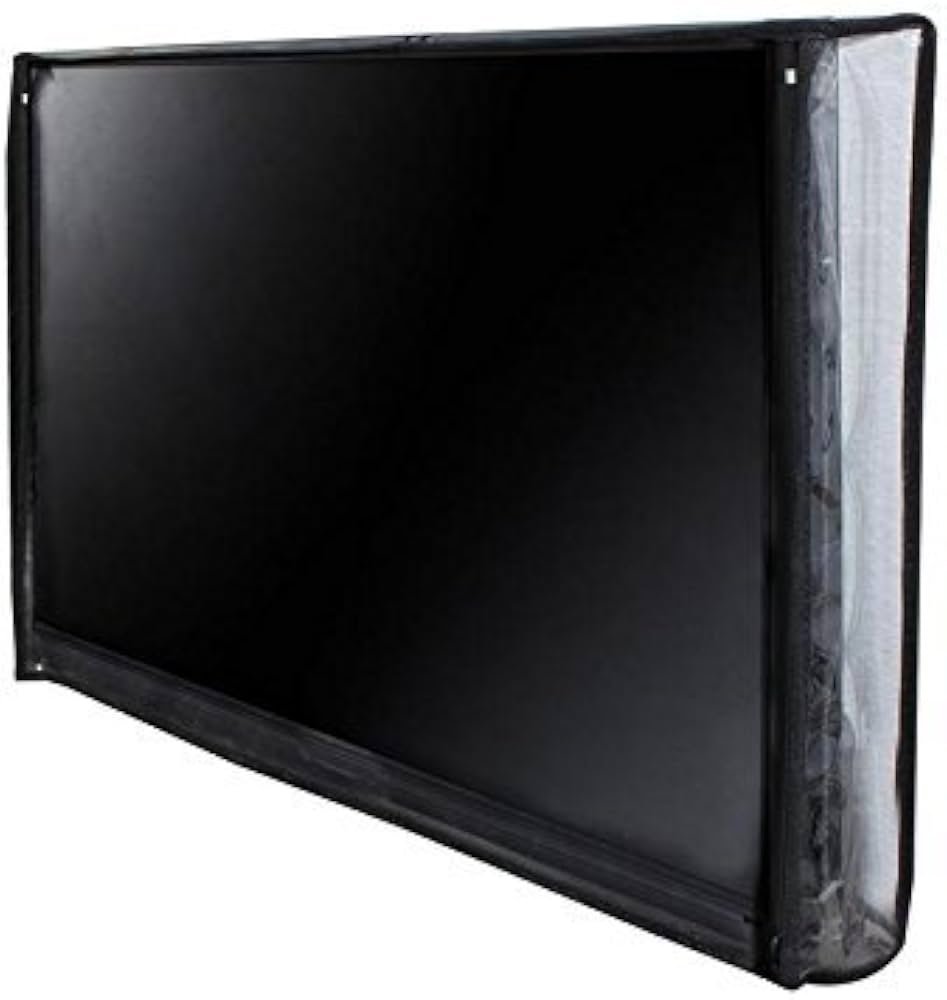
Screen protector films
A screen protector film is a thin, transparent sheet of acrylic or similar material that sits over the TV display. It is held in place by static cling, with no adhesive or glue, and can be removed without leaving marks. The film is precision-cut to fit your specific TV model and size, so it sits flush against the bezel without gaps or overhang.
Screen protector films guard against scratches, fingerprints and dust settling on the display. They also reduce glare and reflections, which is especially useful in bright rooms or if your TV is near a window. The film is optically clear, so it does not significantly dim the picture or change the colours you see.
Dust covers
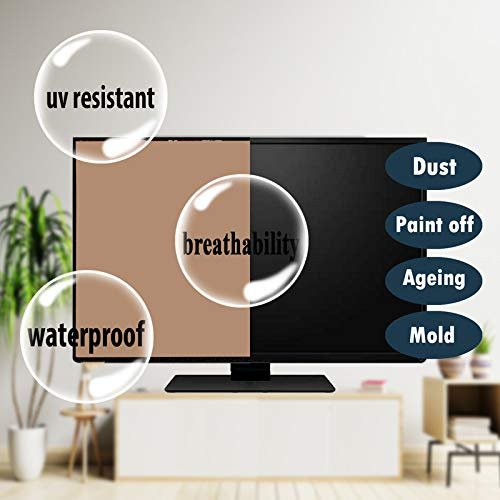
A dust cover is a fabric or plastic sheet that drapes over the entire TV when it is not in use. It keeps dust, moisture and UV rays off the set, making it useful for TVs in storage, on patios, or in garages.
A dust cover does not protect the screen from scratches — it only blocks dust and moisture. Once you turn the TV on, you remove the cover, so it offers no protection during use.
Hard acrylic or polycarbonate panels
Some manufacturers make rigid protective panels or enclosures for TVs, usually for commercial or outdoor use. These are bulky, expensive and rarely used in Indian homes. For a 55-inch living room TV, they are not practical.
What decides which cover is right for your TV?
Three things decide which type suits your home: what you are protecting against, where your TV sits, and your budget.
What you are protecting against
If your main concern is everyday damage — scratches from children’s fingers, pet claws, dust settling on the screen, or fingerprints — a screen protector film is the answer.
If you are protecting a TV that sits unused for months, or one that lives outdoors or in a garage, a dust cover is enough. If you want both, you can use them together: a film while the TV is in use, and a dust cover when it is stored.
Where your TV is mounted or placed
A wall-mounted TV in a living room with children or pets benefits most from a screen protector film. A TV on a stand in a bright room, where sunlight or lamps reflect off the screen, also gains from an anti-glare film. A TV in storage, in a second home, or on an outdoor patio needs a dust cover more than a film.
Your budget
Dust covers cost significantly less than films. The value depends on the price of your TV. A ₹3,699 anti-glare protector is about 9% of a ₹40,000 TV and about 2.5% of a ₹1,50,000 TV, the range in which televisions sell in India.
As an example only, if the film prevented one damage event that would otherwise lead to a ₹28,000 panel replacement, it would cover its cost about seven and a half times over.
The two main types of screen protector film compared
If you decide a screen protector film is right for you, your next choice is between crystal clear and anti-glare. Both fit the same TV. The difference is in how they handle light.
| Type | Reflection reduction | Picture brightness | Best for | Price |
|---|---|---|---|---|
| Crystal clear | Minimal | Full brightness | Dark rooms, OLED TVs | ₹3,499 |
| Anti-glare (matte) | 90% reduction | Slightly reduced | Bright rooms, windows nearby | ₹3,699 |
| Blue light filter | Minimal | Full brightness | Evening viewing, children’s eyes | ₹2,999 |
Prices as of October 2026 — the product page always shows the current price, or contact Screen Guardian.
Prices are from Screen Guardian’s product pages and include free shipping within India. Anti-glare reduction is the product page’s rated figure. Blue light filter is available in all sizes from 32 to 75 inches.
Crystal clear protectors
A crystal clear film is transparent and does not change how your picture looks. It guards against scratches and fingerprints but does not reduce glare. Choose this if your TV is in a dark room, if you have an OLED TV (which already has rich blacks), or if you sit far enough from windows that reflections are not a problem.
Anti-glare protectors
An anti-glare film has a matte finish that reduces reflections by 90%, making it ideal for bright rooms or TVs near windows. The trade-off is a very slight reduction in brightness and colour vibrancy — most viewers do not notice it, but it is there.
Choose this if your living room gets natural light, if you have lamps that reflect off the screen, or if glare bothers you when you watch.
Blue light filter protectors
A blue light filter reduces the blue light emitted by the TV by up to 50%, which some people find easier on the eyes during evening viewing. It is not a substitute for screen time limits, especially for children, but it may reduce eye strain. It costs ₹2,999 and is available in all sizes from 32 to 75 inches.
How to check if a protector will fit your 55-inch TV
A 55-inch TV is measured diagonally across the screen, but what matters for a protector is the actual width and height of the visible display. Most 55-inch TVs have a visible screen that is 47.9 inches wide and 27 inches tall. A protector that does not match closely will leave gaps at the edges or overhang the bezel.
Before you order, measure your TV’s visible screen — the part that lights up, not the black bezel around it. Use a soft tape measure and measure from the inside edge of the bezel on the left to the inside edge on the right for width, and from top to bottom for height.
Compare your measurements with the product page of the protector you are considering. If your TV is a Samsung, LG, Sony or TCL 55-inch model, check the product page to confirm the fit for your exact model before buying.
How screen protector films are applied and removed
Unpack the film and align it carefully with the screen edges. Press it gently onto the display, working from the centre outwards to avoid trapped air. Keep the screen dust-free before you press, because dust under the film is the most common cause of a poor fit.
To reposition the film, peel it up from one corner, lift it away from the screen, then align and press it again. Removal works the same way: peel one corner gently and lift the film off.
What you pay and what is included
Prices are in the comparison table above, and all include free shipping within India.
What you get is the precision-cut film, ready to apply. Screen Guardian offers a 7-day returns policy: if the protector arrives damaged or does not fit your TV, email them and they will sort it within 24 hours. This means you can order with confidence and return it if there is any problem.
Common mistakes to avoid
Buying the wrong size
The most common mistake is assuming that a “55-inch protector” will fit any 55-inch TV. In fact, different brands and models have slightly different bezel sizes and screen dimensions. Always measure your TV and compare the width and height with the product page before ordering. A protector that is even half an inch too wide will not sit flush, and one that is too narrow will leave visible gaps.
Thinking a protector will survive a hard impact
A screen protector film guards against scratches, fingerprints and glare — not hard impacts. If a child throws a toy at the screen or a pet jumps against it, the film will not prevent the panel from cracking.
A film is everyday protection, not impact armour. If impact protection is your main concern, you need a rigid acrylic or polycarbonate panel, which is bulky and not practical for most living rooms.
Leaving a dust cover on while the TV is on
A fabric dust cover must be removed before you turn the TV on. Leaving it on will trap heat, block ventilation and risk damaging the set. A dust cover is for storage only, not for use during viewing.
Assuming a protector will void your warranty
Check your TV warranty and the manufacturer’s terms, since most warranties cover manufacturing defects, not accidental damage such as scratches or impacts.
Can you leave a protective film on permanently?
Yes, you can leave a screen protector film on your TV permanently. Over time the film may need to be reapplied or replaced. If you plan to keep the protector on long-term, check it every few months to make sure it is still adhering evenly.
If you see bubbles, wrinkles or edges lifting, peel it off, clean both the film and the screen with a soft, dry cloth, and reapply it.
Frequently asked questions
Can I use a screen protector on an OLED TV?
Yes. OLED TVs have perfect blacks and do not need anti-glare protection as much as LED TVs do. A crystal clear protector is ideal for OLED sets because it preserves the picture quality without adding a matte finish. Screen Guardian’s protectors fit OLED TVs from Samsung, LG and Sony.
What if my TV is not a standard size, or I have a curved screen?
Screen Guardian stocks protectors for 32, 43, 50, 55, 65 and 75 inch TVs. If your TV is a non-standard size or has a curved display, a standard flat protector will not fit. Contact Screen Guardian to check whether a custom option is available for your model.
Can I make a regular TV weatherproof for outdoor use?
A screen protector film is not weatherproof and will not protect a TV from rain, humidity or UV rays. If you want to use a TV outdoors, you need a weatherproof enclosure — a rigid, sealed cabinet with ventilation and drainage. These are expensive and not practical for most homes.
For seasonal outdoor use, a fabric dust cover offers basic protection when the TV is not in use, but it is not a substitute for a proper weatherproof enclosure. If outdoor TV use is important to you, buy a TV designed for outdoor use, or keep your indoor TV indoors.
Related guides
Order your 55-inch screen protector from Screen Guardian
If you have a 55-inch LED, OLED or Smart TV and want to protect it from scratches, fingerprints and glare, a screen protector film is a suitable choice. Measure your TV’s visible screen width and height, then visit the 55-inch protector page to choose crystal clear or anti-glare.